In today’s digital world, the Internet has become an essential part of our daily lives. Whether you are browsing websites, watching videos, sending emails, or using social media, everything depends on the Internet. But have you ever wondered what the Internet actually is and how it works behind the scenes?
In this article, we will explain the concept of the Internet in simple language, how it functions, and why it is so important in modern life.
🌍 What is the Internet?
The Internet is a global network of interconnected computers and devices that communicate with each other using standard protocols. It allows users to share information, access services, and connect with people worldwide.
In simple words, the Internet is like a huge network of networks that connects millions of private, public, academic, business, and government networks across the globe.
🧠 Basic Concept of the Internet
To understand the Internet easily, think of it like a postal system:
- You send a message → like sending a letter
- The address helps deliver it → like an IP address
- The system routes it → like routers and servers
Similarly, the Internet sends data from one device to another using a structured system.
⚙️ How Does the Internet Work?
The Internet works through a combination of hardware, software, and communication protocols. Let’s break it down step by step:
1. 📡 Connecting to the Internet
To access the Internet, you need:
- A device (computer, smartphone, tablet)
- An Internet connection (Wi-Fi, mobile data, broadband)
- An Internet Service Provider (ISP)
Your ISP connects your device to the global Internet network.
2. 🔢 IP Address (Identity of Your Device)
Every device connected to the Internet has a unique number called an IP address.
Example: 192.168.1.1
This works like a home address so that data knows where to go.
3. 🌐 Domain Name System (DNS)
Humans cannot remember IP addresses easily, so we use domain names like:
- google.com
- youtube.com
DNS converts these names into IP addresses so computers can understand them.
4. 📦 Data is Broken into Packets
When you send or receive data (like opening a website), the information is divided into small packets.
Each packet contains:
- Data
- Sender address
- Receiver address
These packets travel through different routes and reassemble at the destination.
5. 🔁 Routers and Servers
- Routers direct data packets to the correct destination
- Servers store and provide information (like websites, files, videos)
For example:
When you open a website, your request goes to a server, and the server sends back the website data.
6. 🔗 Protocols (Rules of Communication)
The Internet uses rules called protocols to ensure smooth communication.
Important protocols include:
- HTTP/HTTPS – for web browsing
- FTP – for file transfer
- TCP/IP – for data transmission
These protocols ensure data is sent correctly and securely.
🖥️ Example: How a Website Loads
Let’s understand with a simple example:
When you type a website URL in your browser:
- Your browser sends a request
- DNS finds the IP address of the website
- Request goes to the server
- Server sends data back in packets
- Browser displays the website
All this happens in just a few seconds!
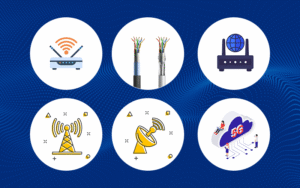
🌐 Types of Internet Connections
There are different ways to connect to the Internet:
- Broadband (Fiber/DSL) – Fast and stable
- Wi-Fi – Wireless connection
- Mobile Data (4G/5G) – Internet on smartphones
- Satellite Internet – Used in remote areas
🔒 Importance of the Internet
The Internet plays a vital role in modern society:
📚 Education
- Online classes
- E-learning platforms
- Access to knowledge
💼 Business
- Online shopping
- Digital marketing
- Remote work
📞 Communication
- Emails
- Video calls
- Social media
🎮 Entertainment
- Movies and streaming
- Online gaming
- Music
⚠️ Advantages and Disadvantages
✅ Advantages
- Instant communication
- Access to global information
- Online services and convenience
- Learning opportunities
❌ Disadvantages
- Cybersecurity risks
- Privacy concerns
- Internet addiction
- Spread of misinformation
🔐 How to Stay Safe on the Internet
Here are some basic safety tips:
- Use strong passwords
- Avoid clicking unknown links
- Keep your software updated
- Use antivirus protection
- Don’t share personal information online
🚀 Future of the Internet
The Internet is continuously evolving with new technologies like:
- 5G networks – faster speed
- Internet of Things (IoT) – smart devices
- Artificial Intelligence (AI) – smarter systems
- Cloud computing – data storage online
These advancements will make the Internet even more powerful and useful in the future.
📝 Conclusion
The Internet is one of the greatest inventions of modern times. It connects people, devices, and information across the world, making communication and access to knowledge faster and easier than ever before.
Understanding how the Internet works helps us use it more effectively and safely. As technology continues to grow, the Internet will play an even bigger role in shaping our future.
reference Wikipedia